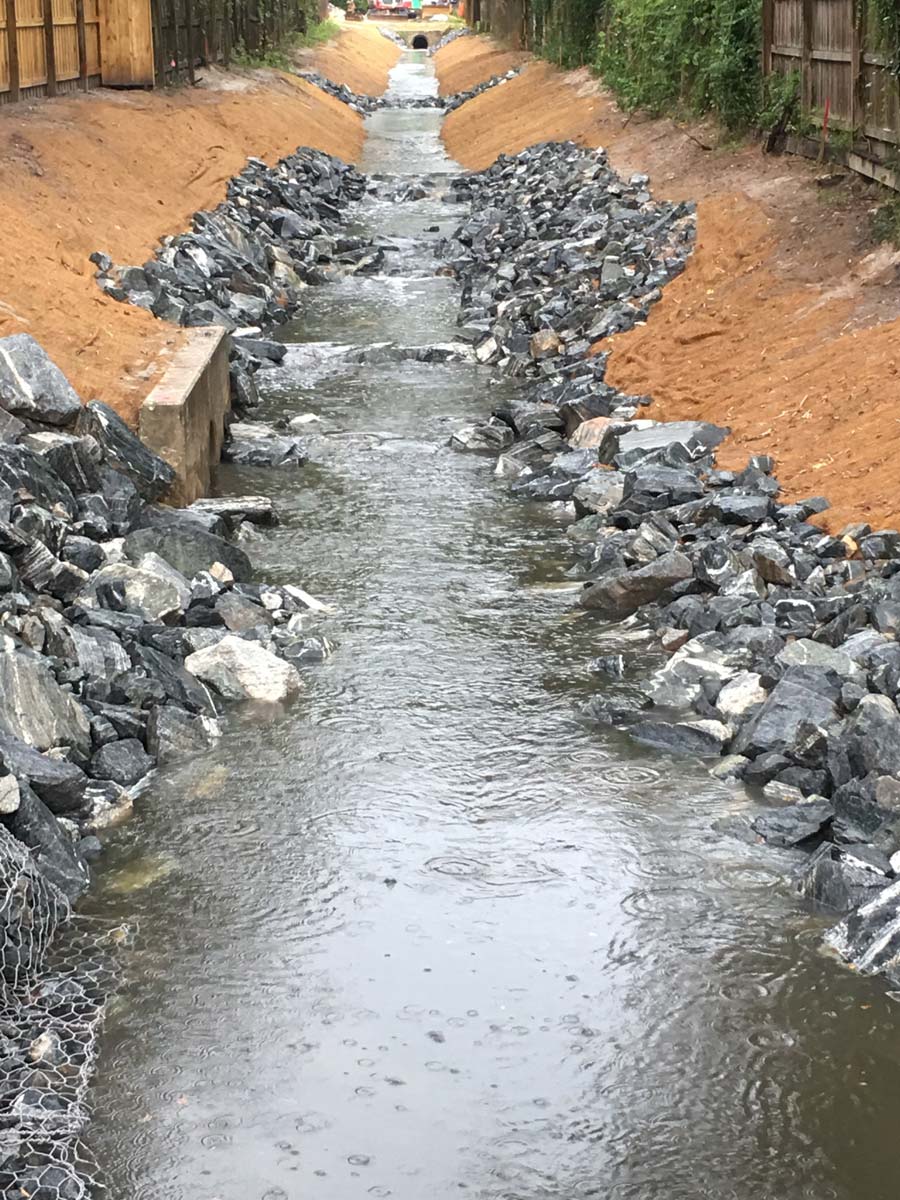
Gainesville Ditch Stabilization Project at a Glance
Location: Gainesville, Florida
Client: City of Gainesville
Project Type: Municipal Ditch and Creek Stabilization
Services: Erosion Control Construction, Dewatering, Slope Stabilization and Channel Restoration
Stabilization Methods: Coconut Turf Reinforcement Mat, Geotextile Filter Fabric, Rock Riprap, Gabions, Vegetation and Stepped Pools
Stabilizing a High-Velocity Residential Drainage Channel
Landshore Enterprises completed a complex ditch stabilization and creek restoration project for the City of Gainesville, Florida, designed to address severe erosion caused by concentrated, high-velocity stormwater flow.
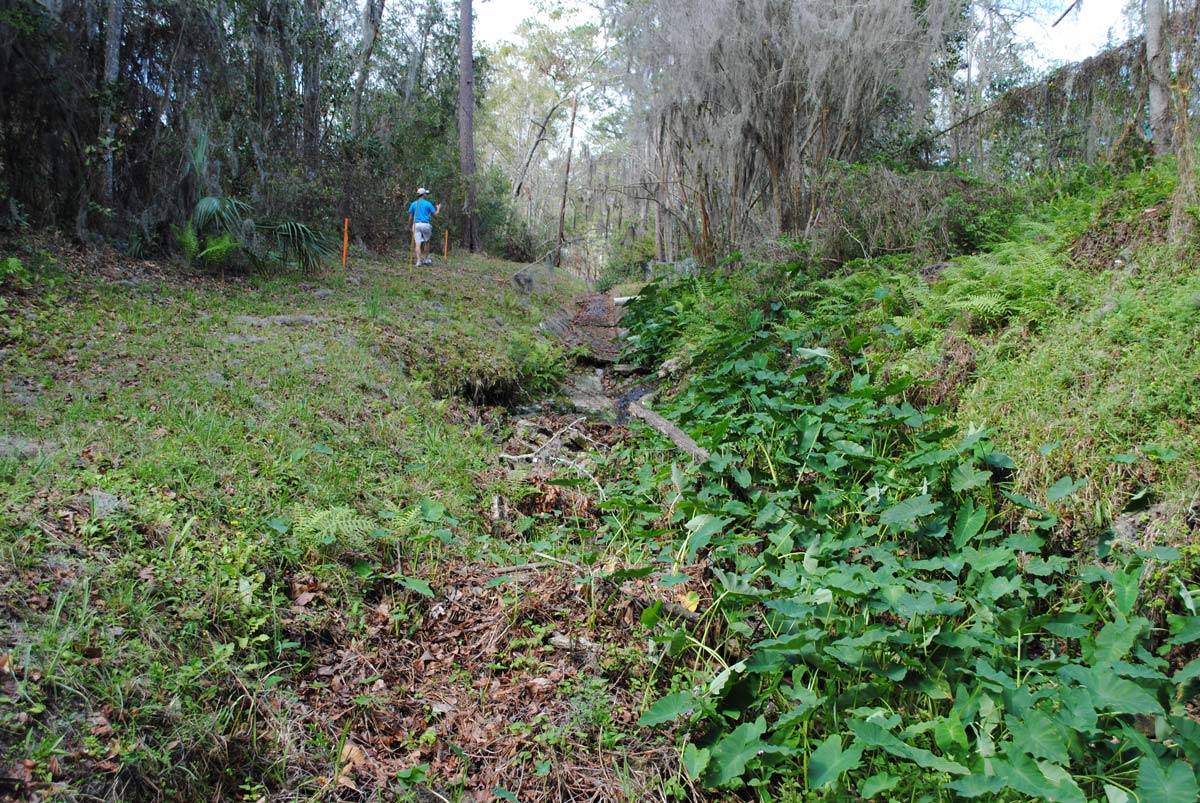
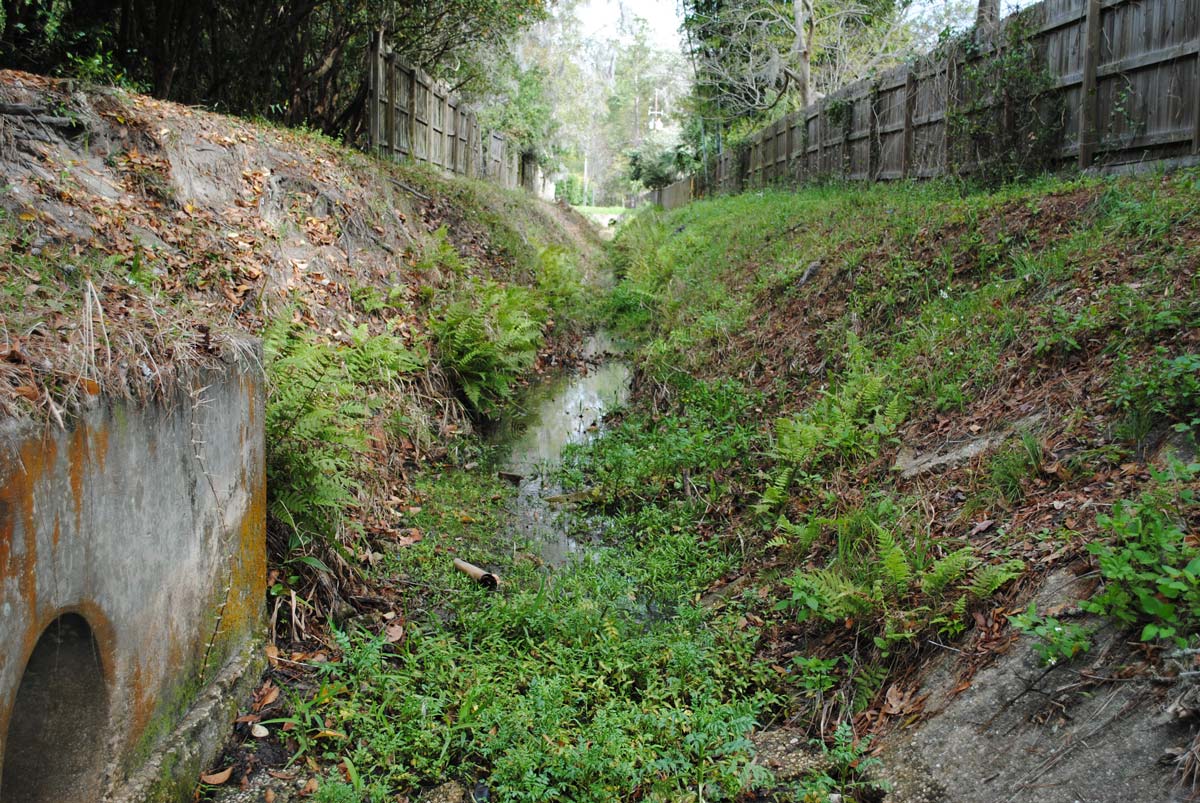
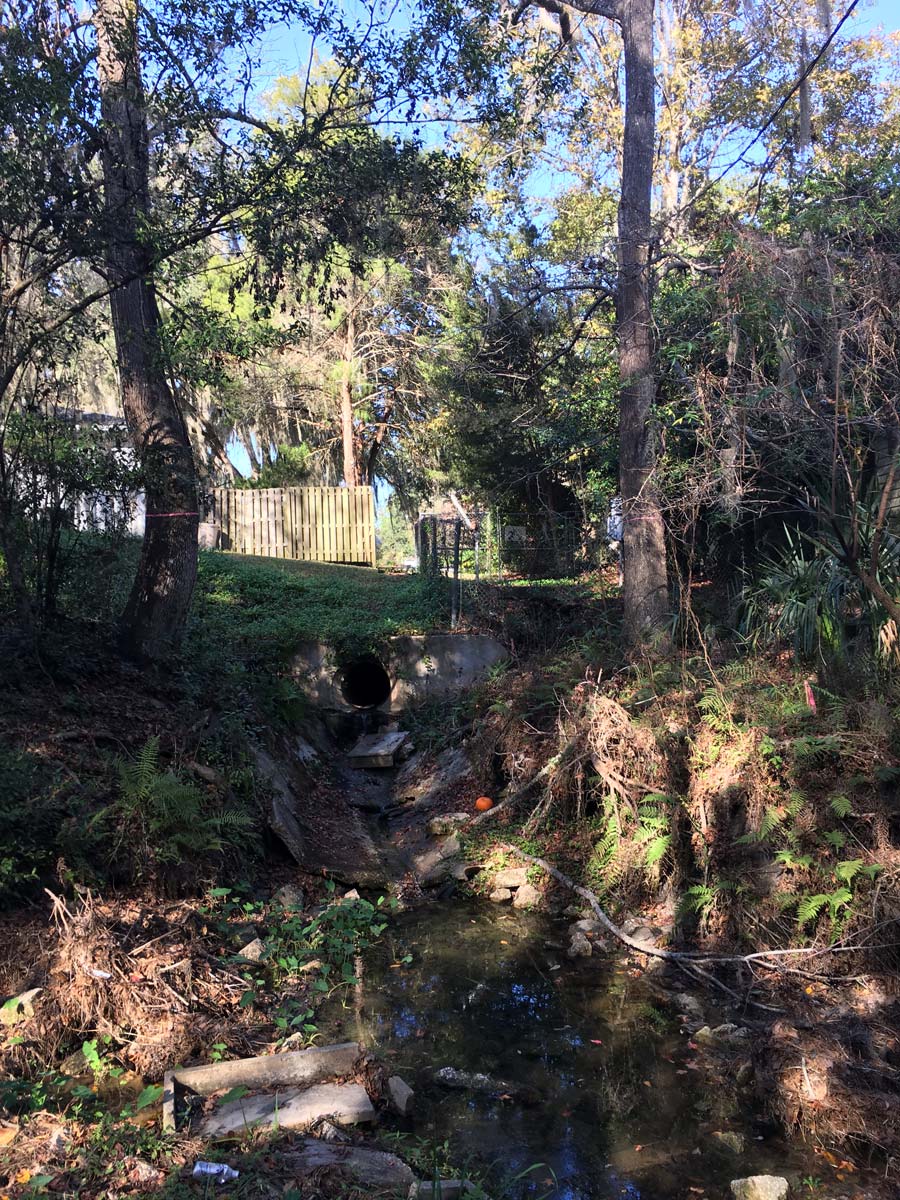
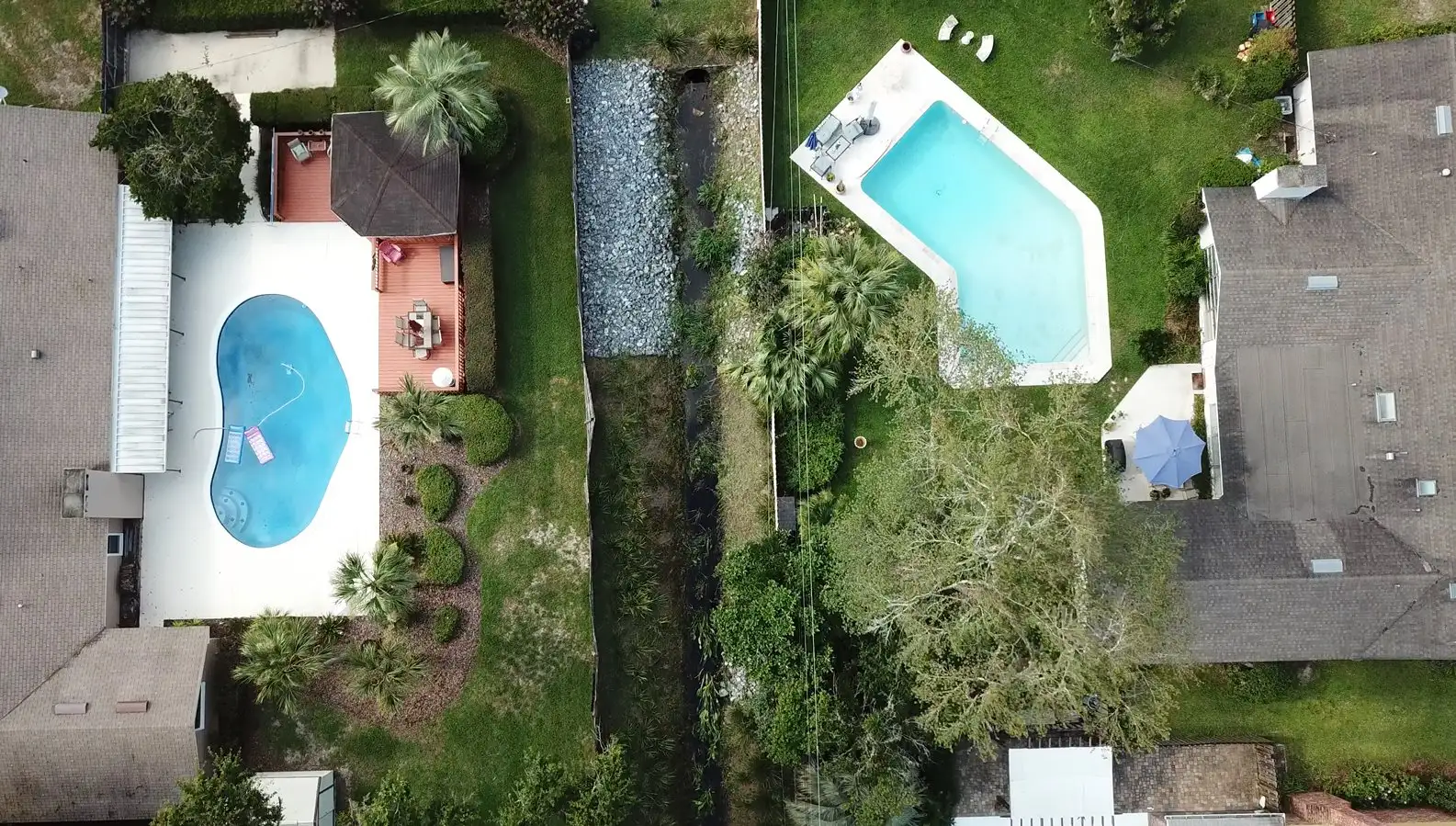
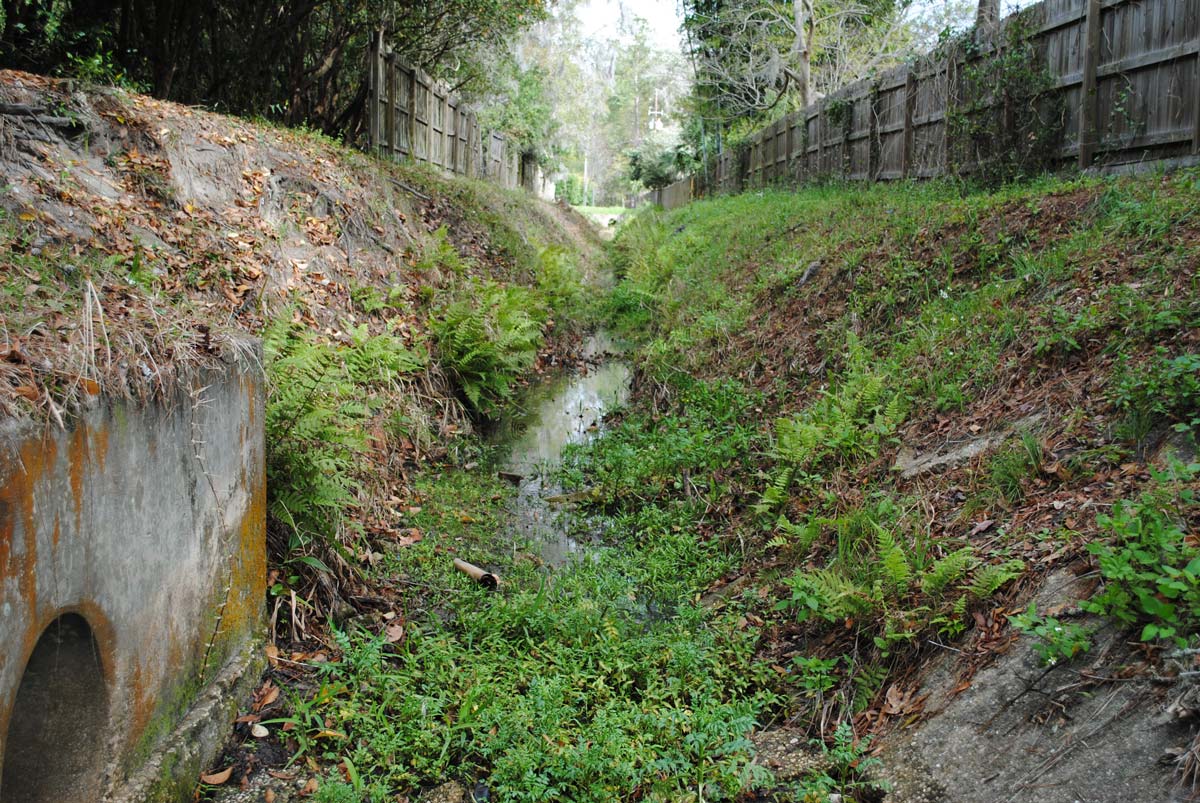
The project was constructed within a narrow drainage corridor that meandered behind residential properties, creating significant access and construction challenges. Years of flowing water had eroded sections of the channel and its slopes, while bends in the ditch experienced particularly aggressive scour.
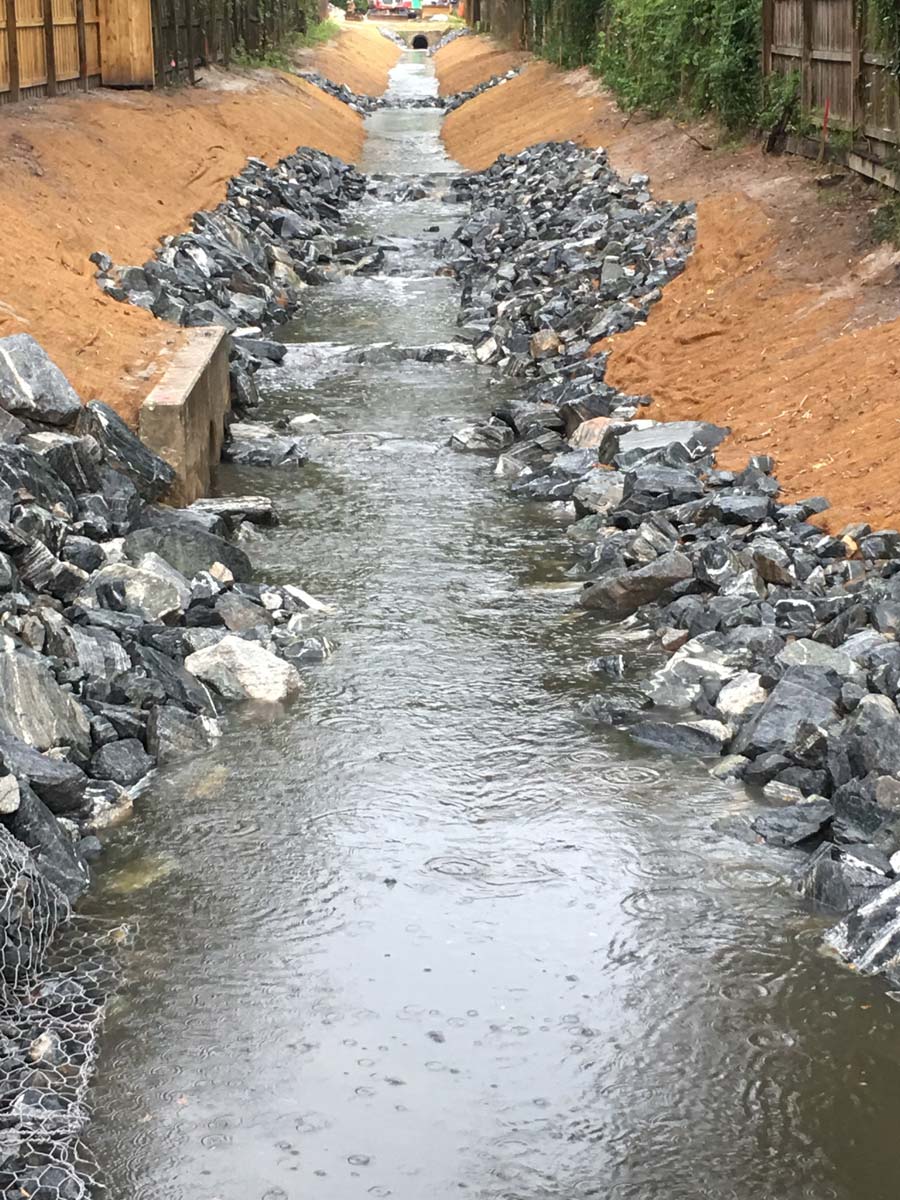
Rather than relying on one erosion control product throughout the channel, the project used several stabilization methods selected for the hydraulic conditions at different locations. The resulting system combined reinforced vegetated slopes, rock protection, gabion structures and carefully constructed stepped pools to stabilize the channel while continuing to convey stormwater through the neighborhood.
The Challenge: Heavy Flow, Severe Scour and Limited Access
High Water Velocity
The Gainesville drainage corridor carried substantial volumes of water during storm events. As water moved through the confined ditch, increasing velocity generated erosive forces along the channel bottom and side slopes.
Scour at Channel Bends
The problem was particularly severe where the channel changed direction. Flowing water concentrated against the outside of bends, creating scour and placing additional stress on the existing embankment.
Residential Access Constraints
Because the ditch ran directly behind residential properties, continued erosion also created concerns beyond the drainage channel itself. Stabilizing the ditch required protecting the adjacent slopes and property while preserving the channel’s ability to safely convey stormwater.
Access added another challenge. The work area was narrow, followed an irregular alignment through an established neighborhood and provided limited space for construction equipment, materials and dewatering operations.
Dewatering an Active Ditch
One of the most important construction challenges was controlling water while the stabilization work was performed.
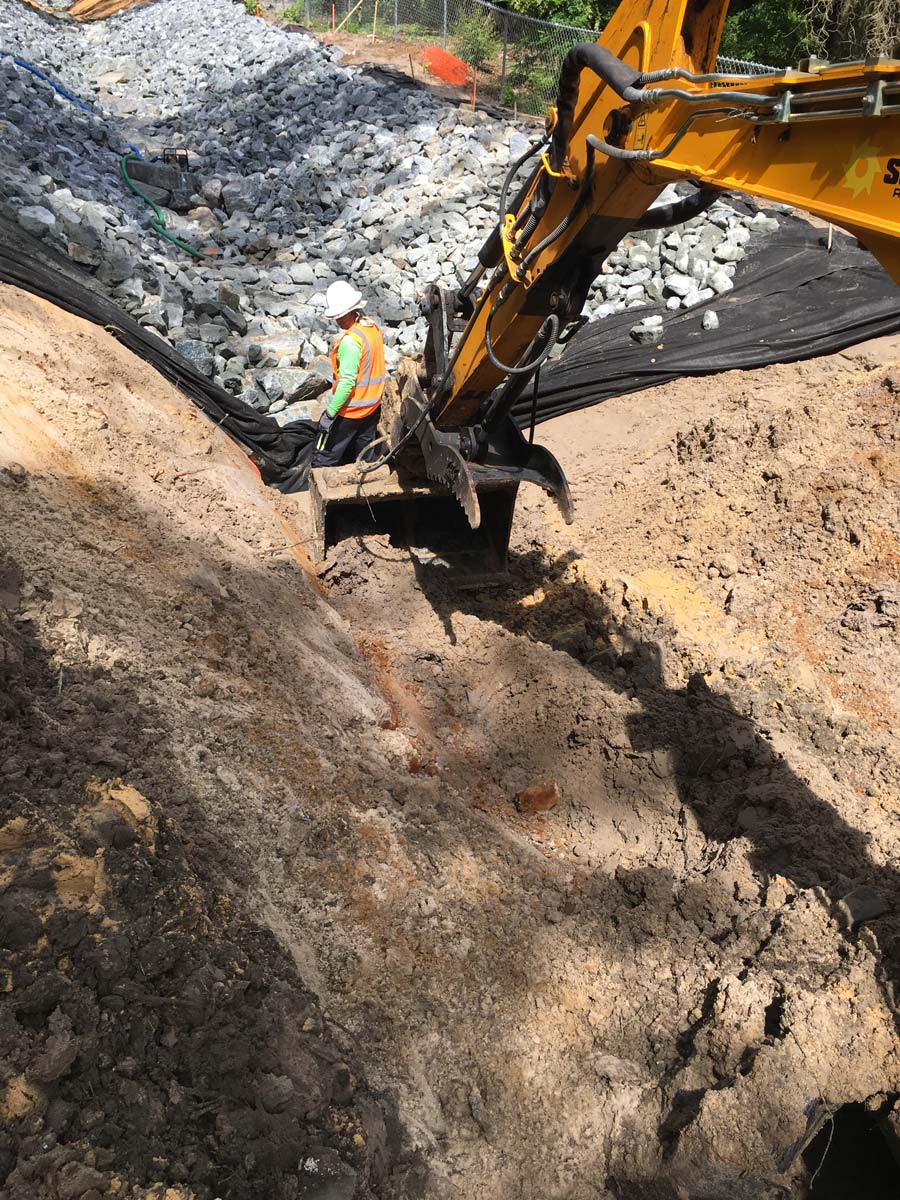
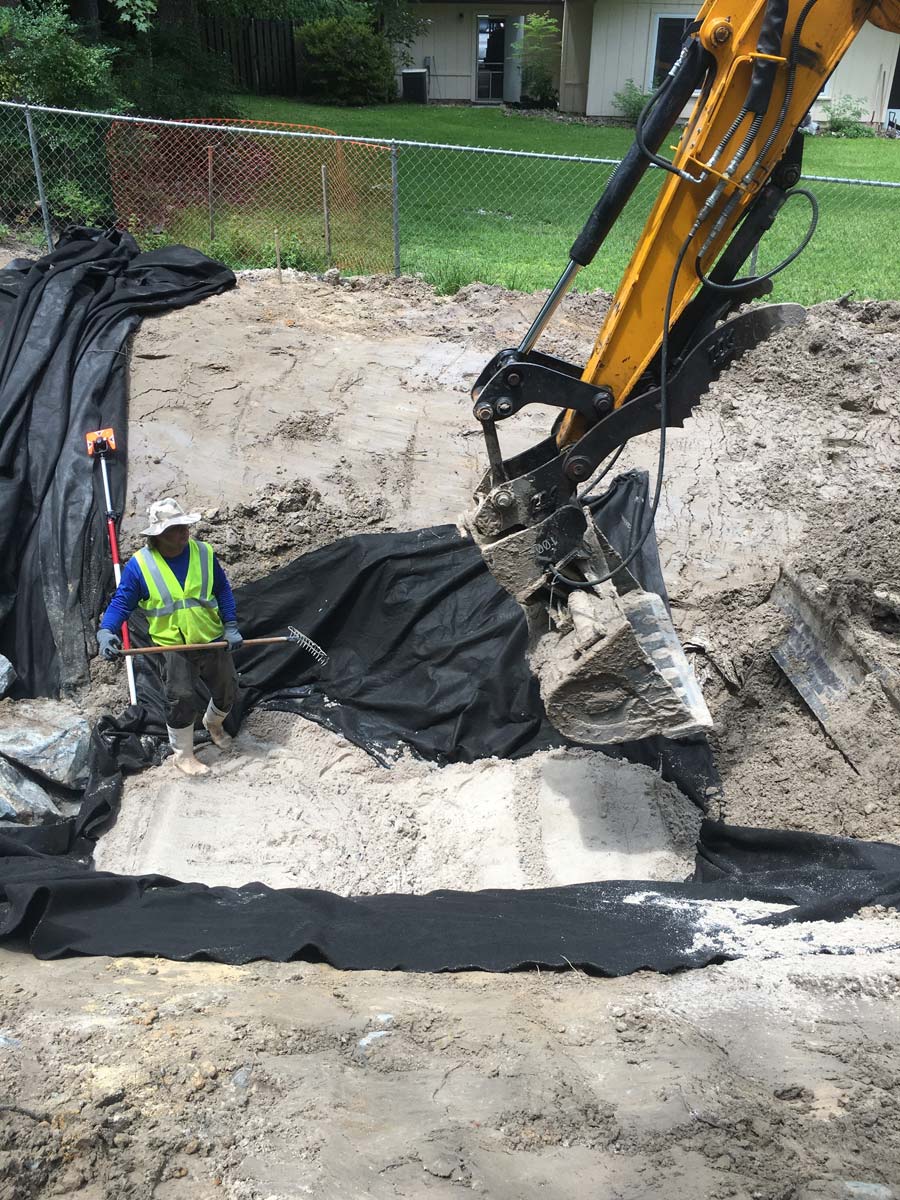
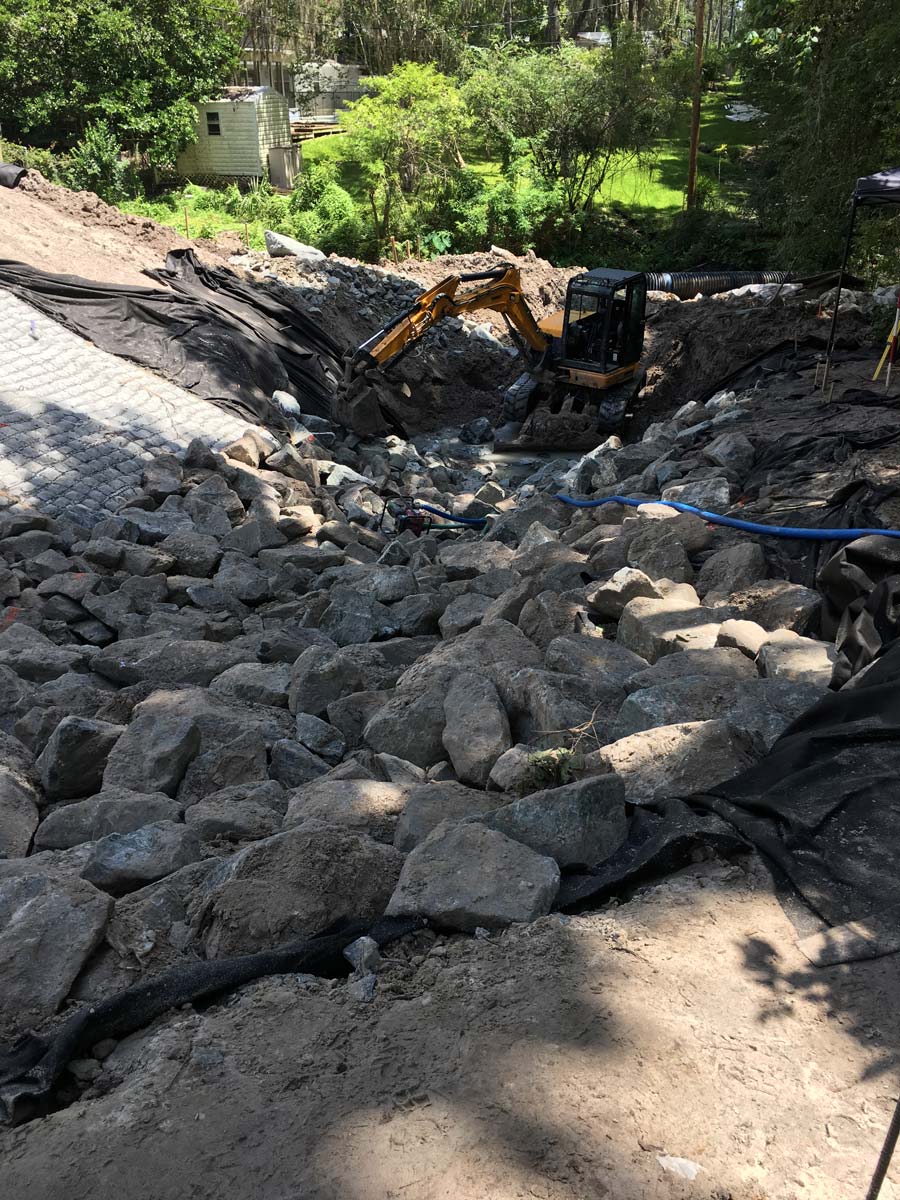
The ditch was an active drainage system with significant water flow. Construction crews needed sufficiently dry and stable working conditions to properly prepare the slopes, install geotextiles, place erosion control materials and construct the gabion and riprap systems.
Landshore implemented dewatering and water-management measures that allowed sections of the channel to be stabilized while maintaining control of the existing flows.
Effective dewatering was critical because erosion-control materials installed beneath or immediately adjacent to flowing water require properly prepared foundations. Attempting to perform the work without controlling the water could have compromised grading, material placement and long-term performance.
A Site-Specific Approach to Ditch Stabilization
The hydraulic forces were not uniform throughout the project, so the stabilization system was not uniform either.
Different portions of the drainage channel required different combinations of erosion protection based on slope conditions, water velocity, scour potential and the geometry of the ditch.
This site-specific approach allowed Landshore to incorporate both vegetated and structural stabilization methods rather than hard-armoring the entire drainage corridor.
Coconut Turf Reinforcement Mat and Vegetated Slopes
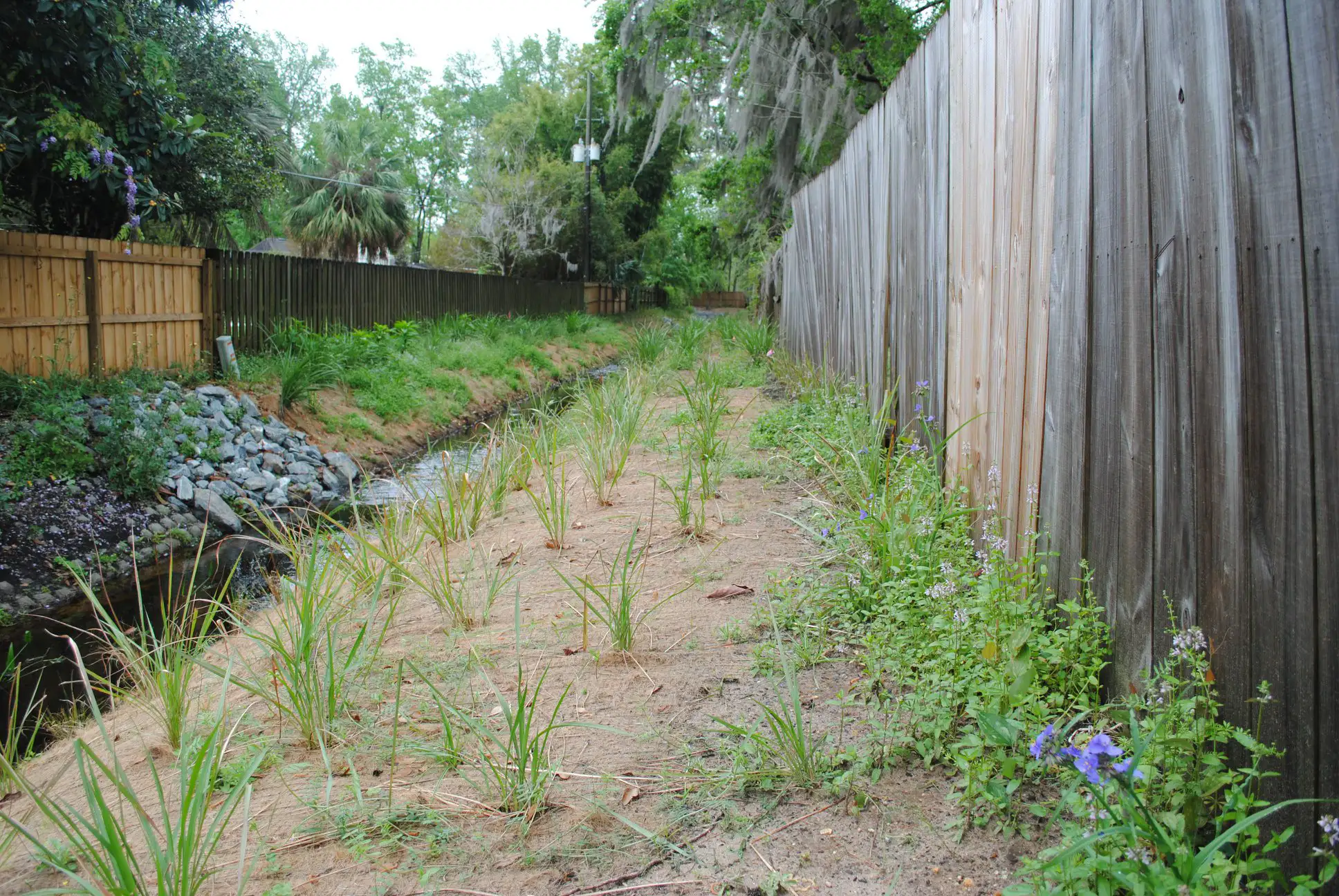
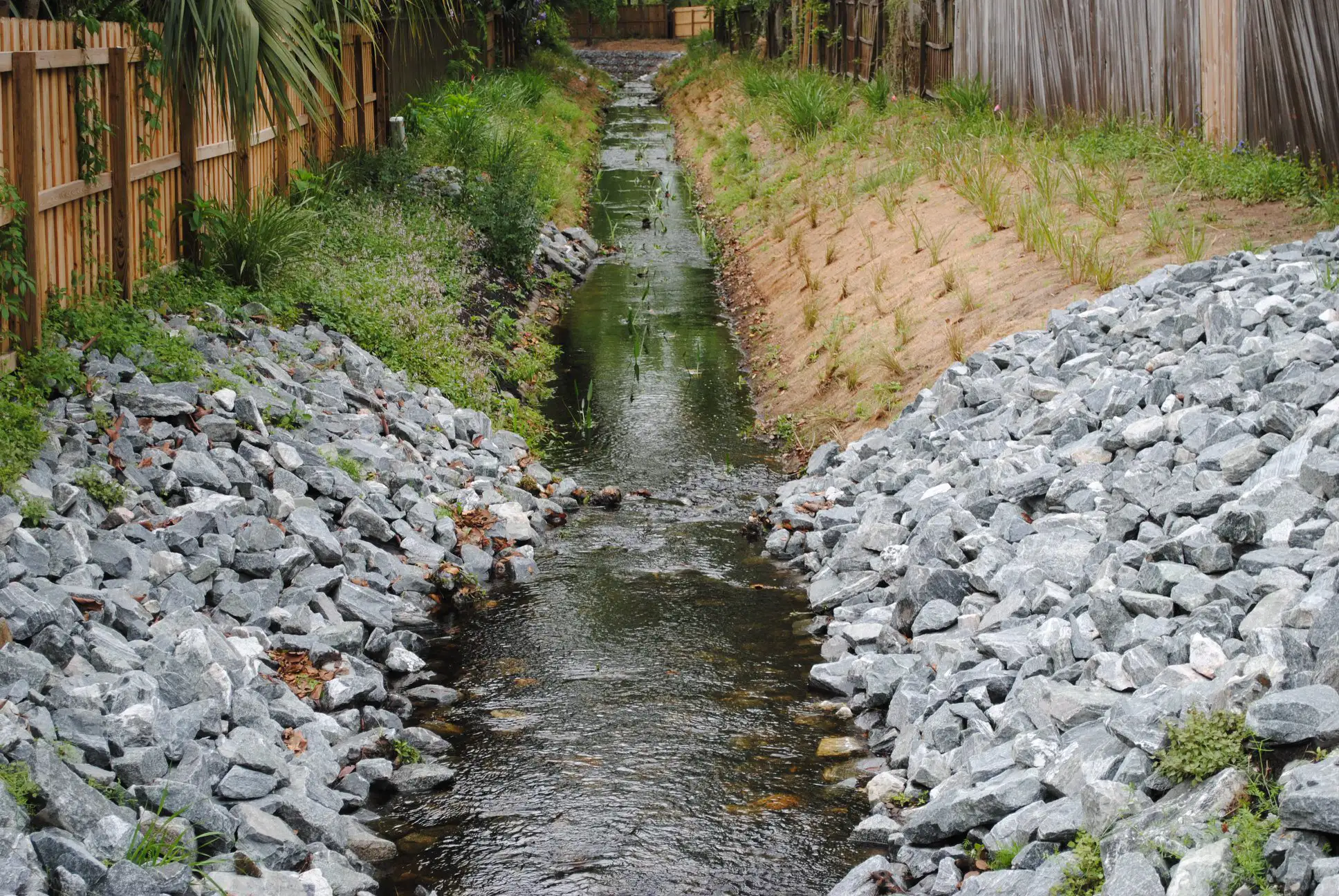
Coconut turf reinforcement mat was installed along portions of the ditch slopes where vegetation could become part of the long-term erosion control system.
The reinforcement mat helped protect the soil while vegetation became established and provided additional reinforcement to the slope as plant root systems developed.
Plantings were incorporated into these areas to create a stabilized vegetated surface capable of helping resist runoff and erosion while maintaining a more natural appearance through the residential corridor.
This approach allowed sections of the project to remain green and permeable instead of relying entirely on rock or concrete.
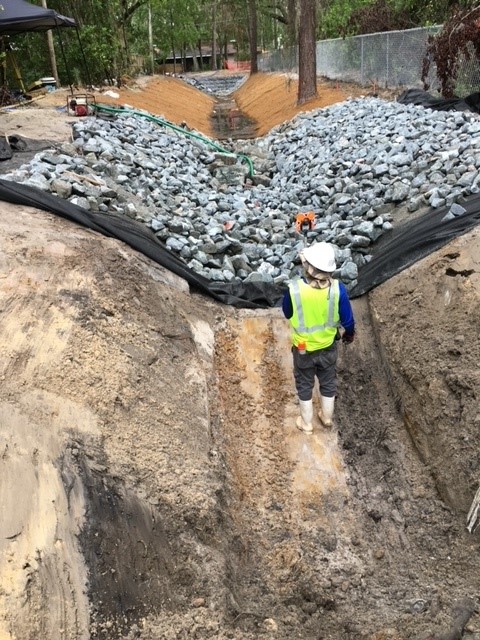
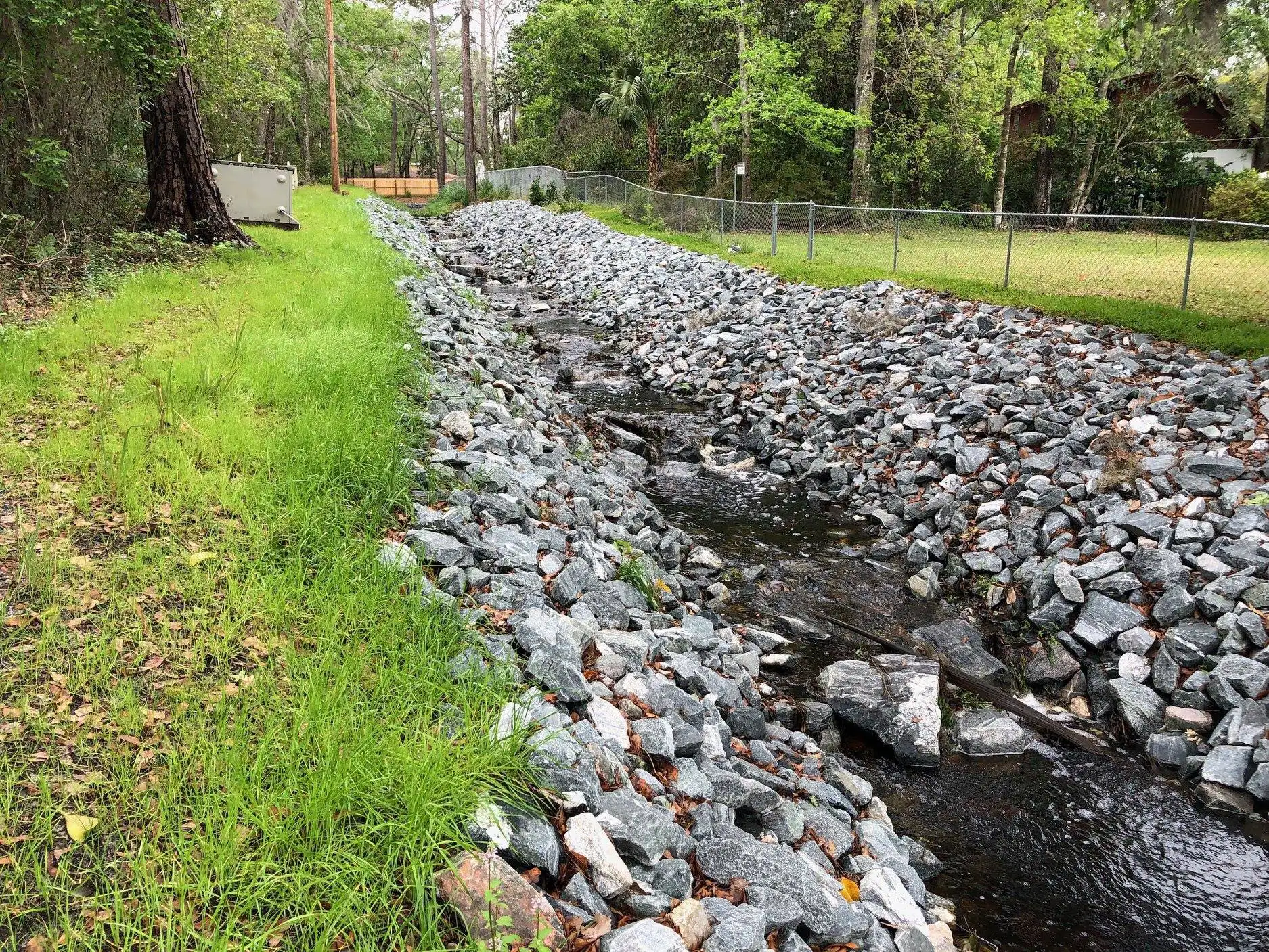
Geotextile Filter Fabric and Rock Riprap
Areas exposed to stronger hydraulic forces required more substantial protection.
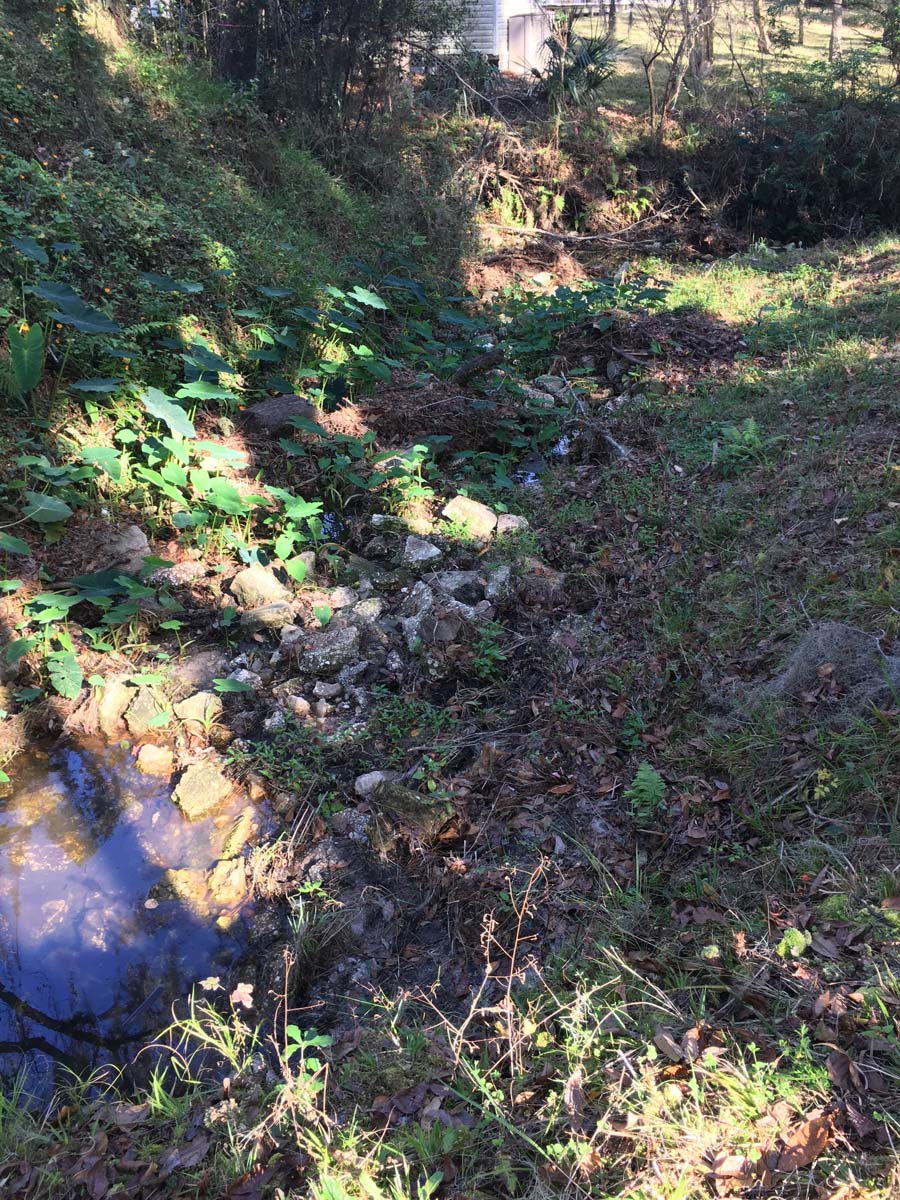
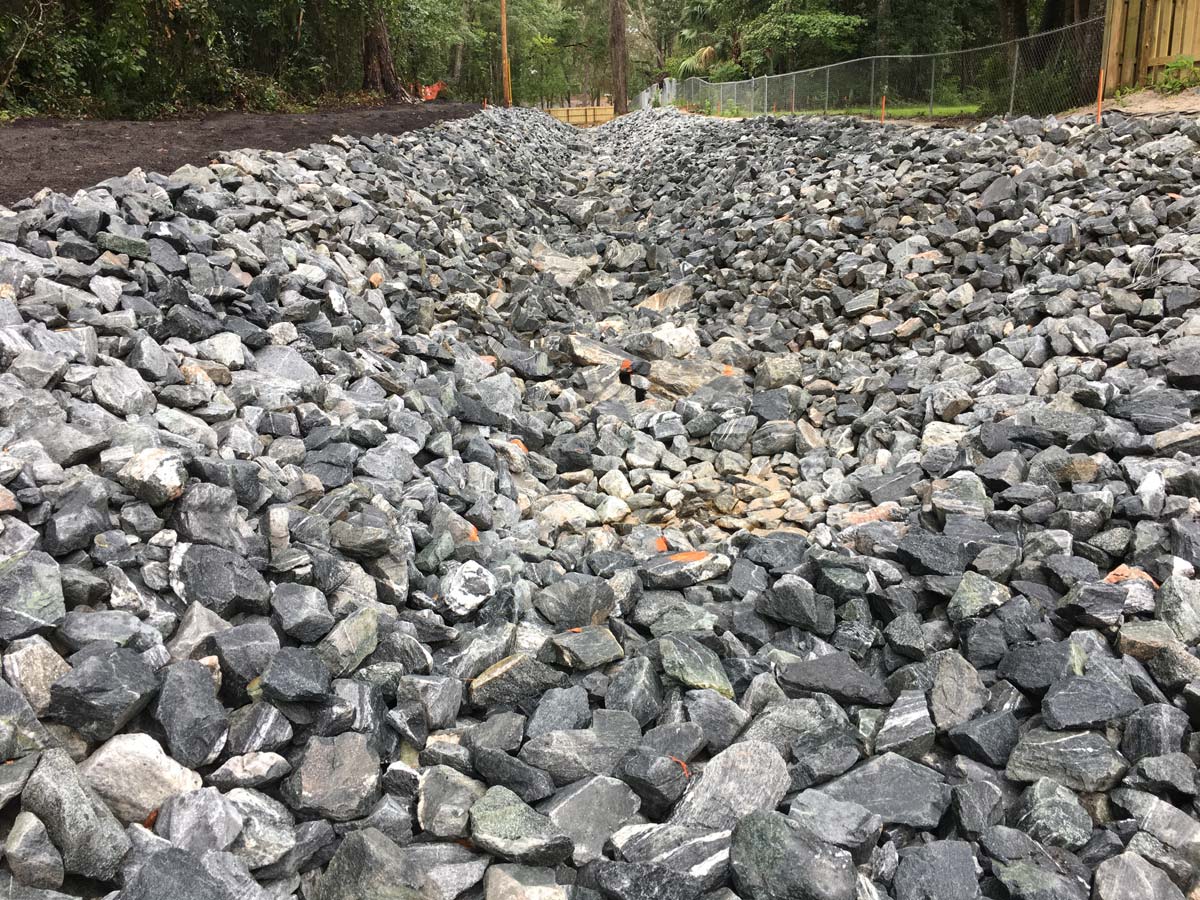
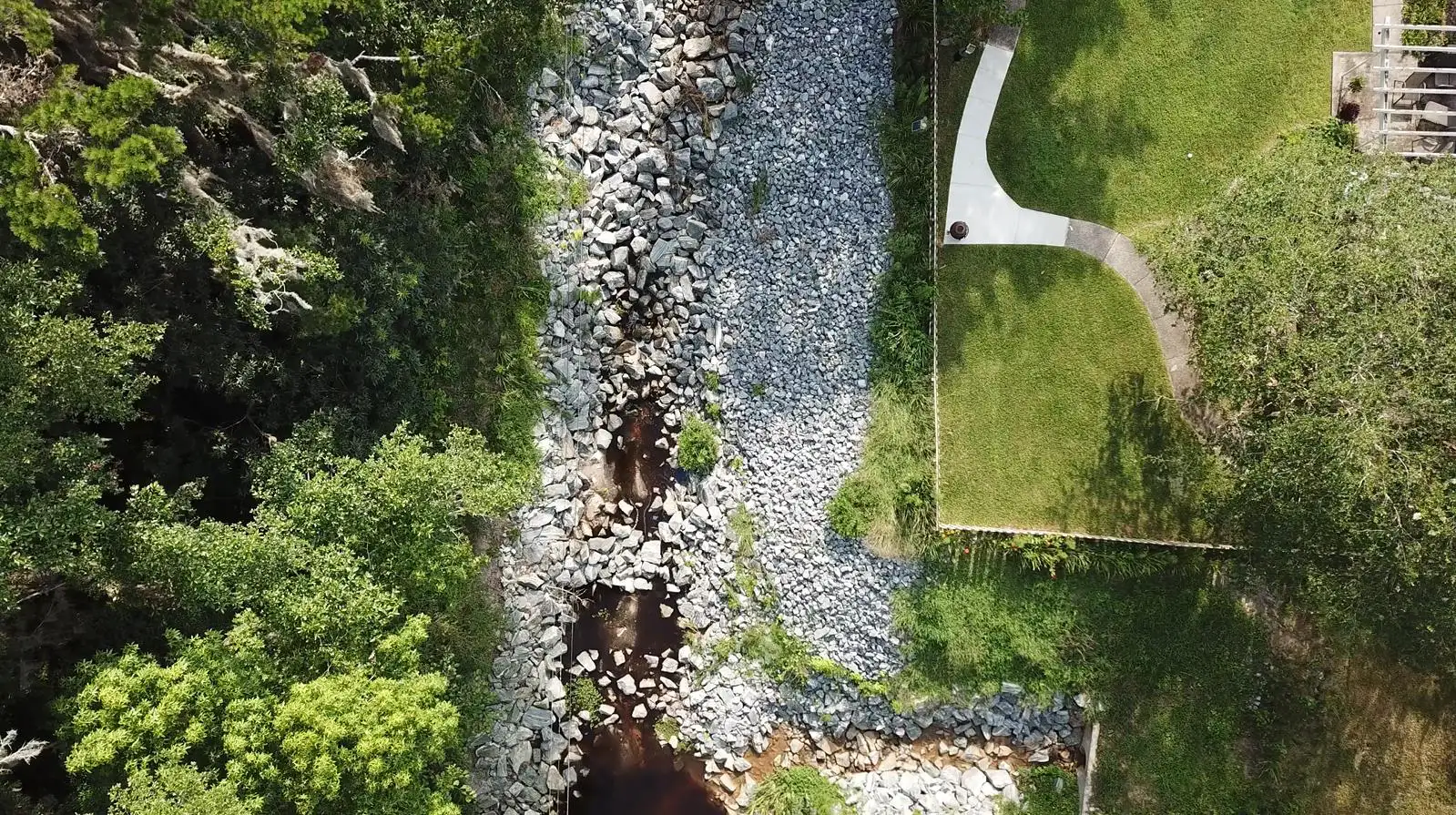
Geotextile filter fabric was installed beneath rock riprap to separate the underlying soil from the rock layer while still allowing water movement through the system.
The riprap provided mass and surface protection capable of resisting the erosive forces created by high-velocity water. It was used in portions of the channel where the potential for scour and soil loss exceeded what a vegetated stabilization system alone could reliably withstand.
The combination of geotextile and properly placed rock protected the underlying soil while allowing the channel to continue functioning as a stormwater conveyance system.
Gabion Stabilization at the Ditch Bend
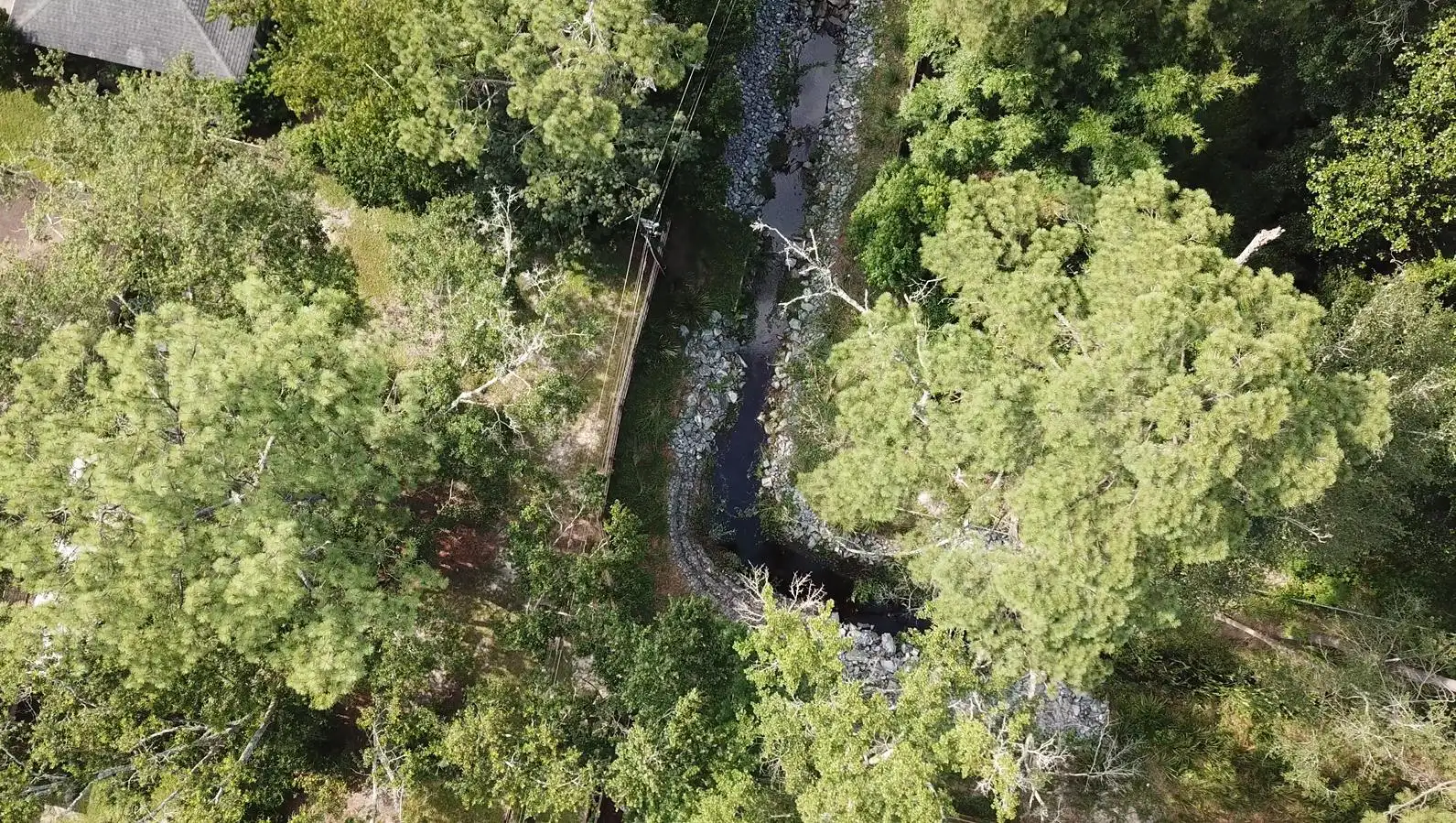
One of the project’s most hydraulically demanding locations occurred where the drainage channel changed direction.
As water entered the bend, hydraulic forces were concentrated against the outside bank. This increased the potential for localized scour and continuing slope failure.
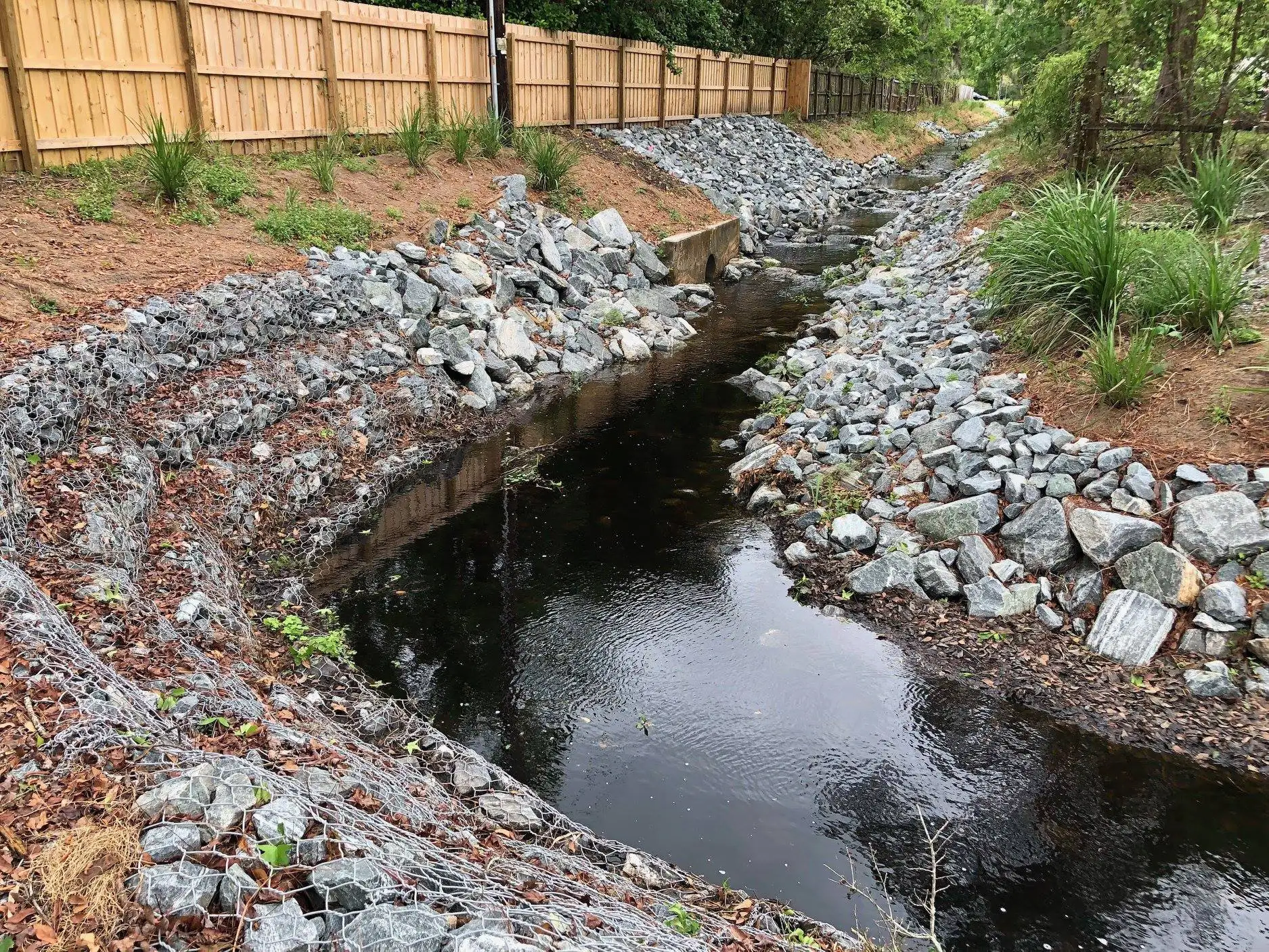
A gabion stabilization system was constructed at the bend to provide heavier structural protection where the water velocity and channel geometry created the greatest erosive forces.
Gabions consist of engineered wire baskets filled with stone. Their combination of mass, permeability and flexibility makes them particularly useful in drainage channels, creek bends and other environments where flowing water creates significant scour potential.
For the Gainesville project, the gabion installation reinforced the vulnerable bend while still allowing drainage through the stone-filled system.
Stepped Pools to Reduce Water Velocity
Stabilizing the slopes addressed only part of the erosion problem. The energy of the flowing water also needed to be managed.
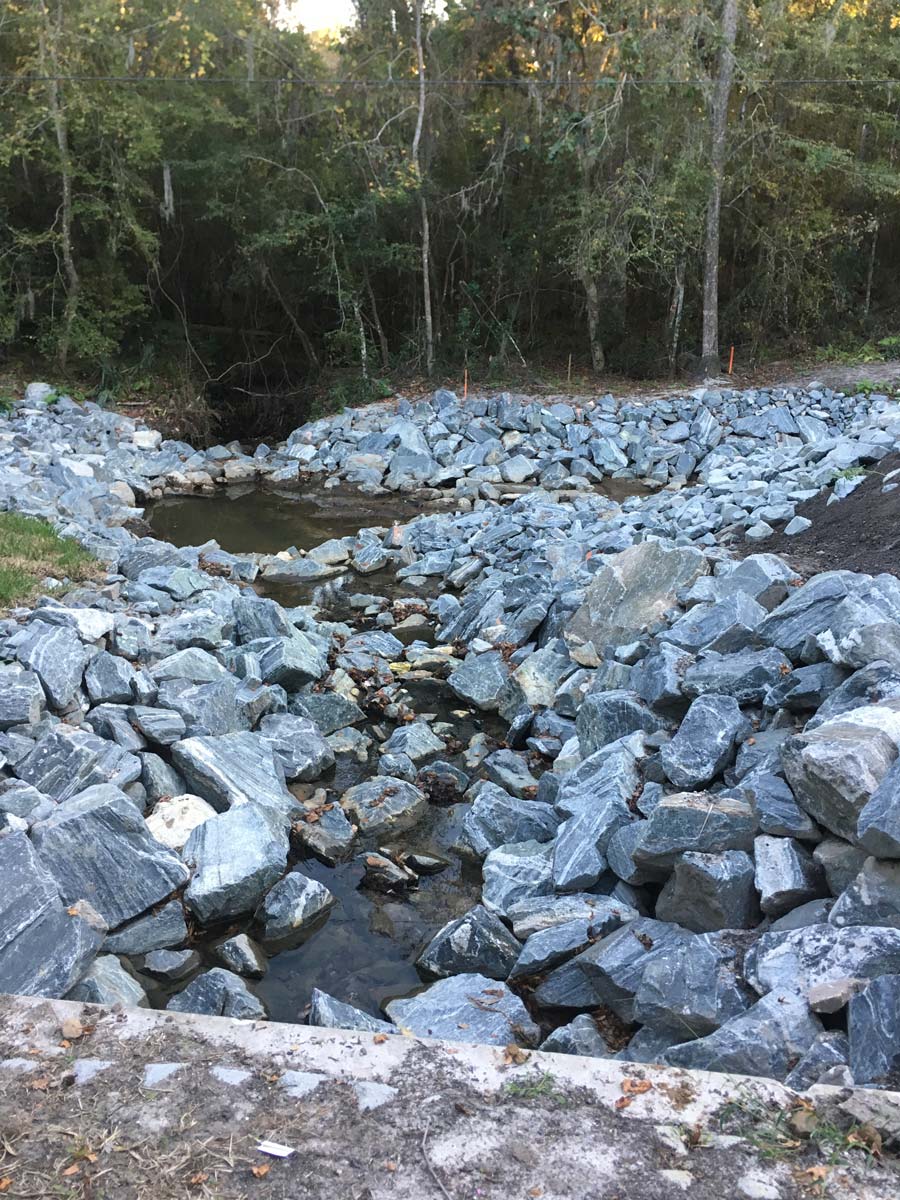
Toward the downstream portion of the project, a sequence of stepped pools was carefully constructed with gradual changes in elevation.
Rather than allowing water to descend rapidly through the channel, the stepped configuration divided the elevation change into smaller increments. Each transition helped dissipate energy and reduce flow velocity before the water continued downstream.
The pools therefore became an important part of the overall erosion-control strategy. Instead of simply protecting the channel against high-velocity water, the design also worked to reduce the hydraulic energy responsible for much of the erosion.
An Ambitious Florida Erosion-Control Project
At the time of construction, the stabilization approach represented an ambitious application of multiple erosion-control techniques within an active Florida drainage channel.
The project required the coordinated installation of vegetated reinforcement systems, rock riprap, geotextile filter fabric, gabions and hydraulic grade-control features within a constrained residential environment.
The project demonstrates why severe ditch and creek erosion often cannot be addressed effectively with a single product or stabilization method.
Hydrology, flow velocity, channel geometry, soil conditions, access limitations and adjacent properties all influence the appropriate solution.
City of Gainesville – Suburban Heights Beville Creek Restoration
The City of Gainesville identifies the work as part of the Suburban Heights Beville Creek Restoration Project.
Landshore Enterprises was selected as the contractor through the City’s competitive procurement process. Construction was substantially underway when Hurricane Irma affected Gainesville in September 2017. Because vegetation on portions of the newly reconstructed banks had not yet fully established, areas of the project experienced significant storm-related erosion.
Following modifications to the restoration plan, Landshore remobilized and reconstructed the affected portions of the creek stabilization system. The City reports that the restoration project was completed in December 2017.
The project remains an example of the engineering and construction challenges associated with restoring high-flow drainage corridors in developed residential environments.
Ditch, Creek and Stormwater Channel Stabilization in Florida
Drainage ditch erosion is often a symptom of a larger hydraulic problem. Concentrated runoff, steep channel grades, changing elevations, inadequate vegetation, unstable soils and high water velocities can progressively erode the channel bottom and side slopes.
Successful ditch stabilization therefore begins with understanding how water is moving through the system.
Depending on site conditions, Landshore’s erosion-control and drainage solutions may incorporate turf reinforcement mats, vegetation, geotextiles, riprap, articulated concrete block systems, gabions, geocells, grade-control structures and other stabilization methods.
For municipalities, communities, golf courses, commercial properties and other owners experiencing erosion within a ditch, swale, creek or stormwater channel, Landshore can evaluate the site and develop a stabilization approach suited to the hydraulic and geotechnical conditions.
Need Help With a Failing Drainage Ditch or Creek?
Landshore Enterprises provides engineering and construction services for erosion control, stormwater drainage systems, ditch stabilization, creek restoration and embankment stabilization throughout Florida.
If high water velocity, scour or slope erosion is affecting your drainage system, contact Landshore to discuss the site conditions and potential stabilization options.
Project Photos