
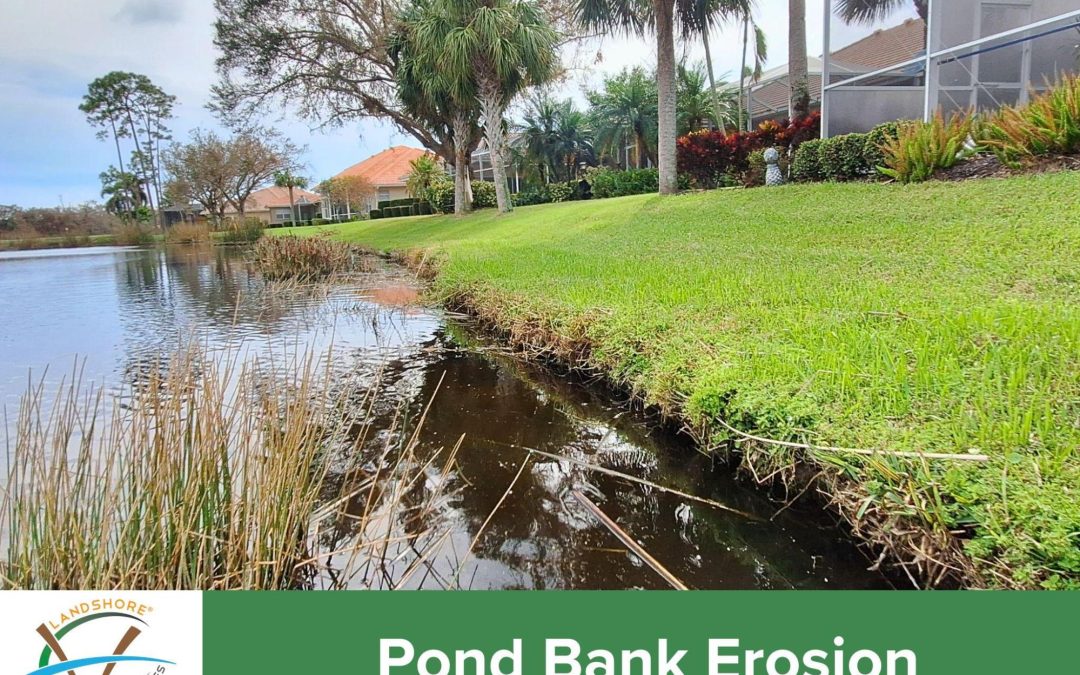
If you’ve noticed soil washing into your pond, exposed roots along the shoreline, or sections of the bank beginning to collapse, you’re not alone. Pond bank erosion is one of the most common issues affecting stormwater ponds, lakes, golf course water features, and community shorelines throughout Florida.
While erosion often begins as a small maintenance concern, it rarely improves on its own. Left untreated, it can threaten nearby infrastructure, reduce stormwater capacity, increase maintenance costs, and diminish the appearance of your property.
The good news is that most shoreline erosion can be successfully addressed—provided the underlying cause is correctly identified.
What Is Pond Bank Erosion?
Pond bank erosion is the gradual loss of soil along the shoreline due to the movement of water, wind, gravity, or human activity. As soil is displaced, the shoreline retreats, slopes become unstable, and sediment is carried into the pond.
Many property owners assume erosion is simply a cosmetic issue. In reality, it is often a sign that the shoreline is no longer functioning as intended.
Why Does Pond Bank Erosion Occur?
There is rarely a single cause. Most erosion results from a combination of environmental conditions and site-specific factors.
1. Wave Action
Even relatively small ponds experience wave energy.
Consistent winds create waves that repeatedly strike the shoreline, washing away fine soils over time. This is especially common on longer ponds where wind has a greater distance to build wave energy, known as “fetch.”
Over months and years, this repetitive action can undercut the bank, causing sections of the slope to collapse.
2. Fluctuating Water Levels
Florida experiences distinct wet and dry seasons. Stormwater ponds may rise several feet during heavy rainfall before gradually receding.
This repeated cycle weakens shoreline soils by:
- Saturating the slope
- Softening soil structure
- Washing away fine particles
- Leaving unsupported soil as water levels fall
Over time, these conditions make shoreline failures more likely.
3. Stormwater Runoff
Not all erosion begins at the water’s edge.
Runoff from roofs, parking lots, sidewalks, and streets often concentrates into a few locations before entering the pond.
When large volumes of water discharge at high velocity, they scour the shoreline and create localized failures.
Common warning signs include:
- Small channels forming down slopes
- Exposed drainage pipes
- Soil washed away near outfalls
- Gullies developing after heavy rain
4. Inadequate Vegetation
Healthy vegetation does much more than improve appearance.
Deep-rooted plants help:
- Reinforce soil
- Dissipate wave energy
Conversely, bare soil, thin turf, or damaged vegetation leaves the shoreline vulnerable to erosion.
Selecting the right vegetation for the site’s conditions is an important part of long-term shoreline stability.
5. Poor Soil Conditions
Some Florida soils are naturally more prone to erosion than others.
Loose sands, poorly compacted fill, and highly erodible soils are more susceptible to movement, particularly when exposed to water.
In some cases, geotechnical evaluations may be recommended to better understand subsurface conditions before designing a repair.
6. Aging Shoreline Protection
Many communities have existing shoreline stabilization systems that are reaching the end of their service life.
Examples include:
- Failing timber bulkheads
- Settling riprap
- Damaged concrete structures
- Degraded erosion control mats and fabrics
- Deteriorated retaining walls
Repairing or replacing these systems before complete failure is often significantly less expensive than emergency reconstruction.
7. Animal Activity
Wildlife can contribute to shoreline instability.
Burrowing animals create voids within the slope, while waterfowl and other wildlife may damage vegetation that helps stabilize the shoreline.
Although animal activity is rarely the sole cause of erosion, it can accelerate existing problems.
Why Ignoring Erosion Can Become Expensive
Many shoreline failures begin as relatively minor maintenance issues.
Without intervention, however, erosion can lead to:
- Loss of usable property
- Increased sediment accumulation in ponds
- Damage to drainage infrastructure
- Utility exposure
- Sidewalk or cart path settlement
- Tree loss
- More complex permitting requirements
- Higher repair costs
The earlier a problem is addressed, the more repair options are typically available.
Choosing the Right Repair Method
One of the biggest misconceptions is that every erosion problem has the same solution.
In reality, effective shoreline stabilization begins with understanding why the erosion is occurring.
Depending on site conditions, repair options may include:
Vegetative Stabilization
Suitable for lower-energy environments where establishing healthy vegetation can provide long-term protection.
Riprap
Rock armoring is often effective in areas exposed to continuous wave action or concentrated flow.
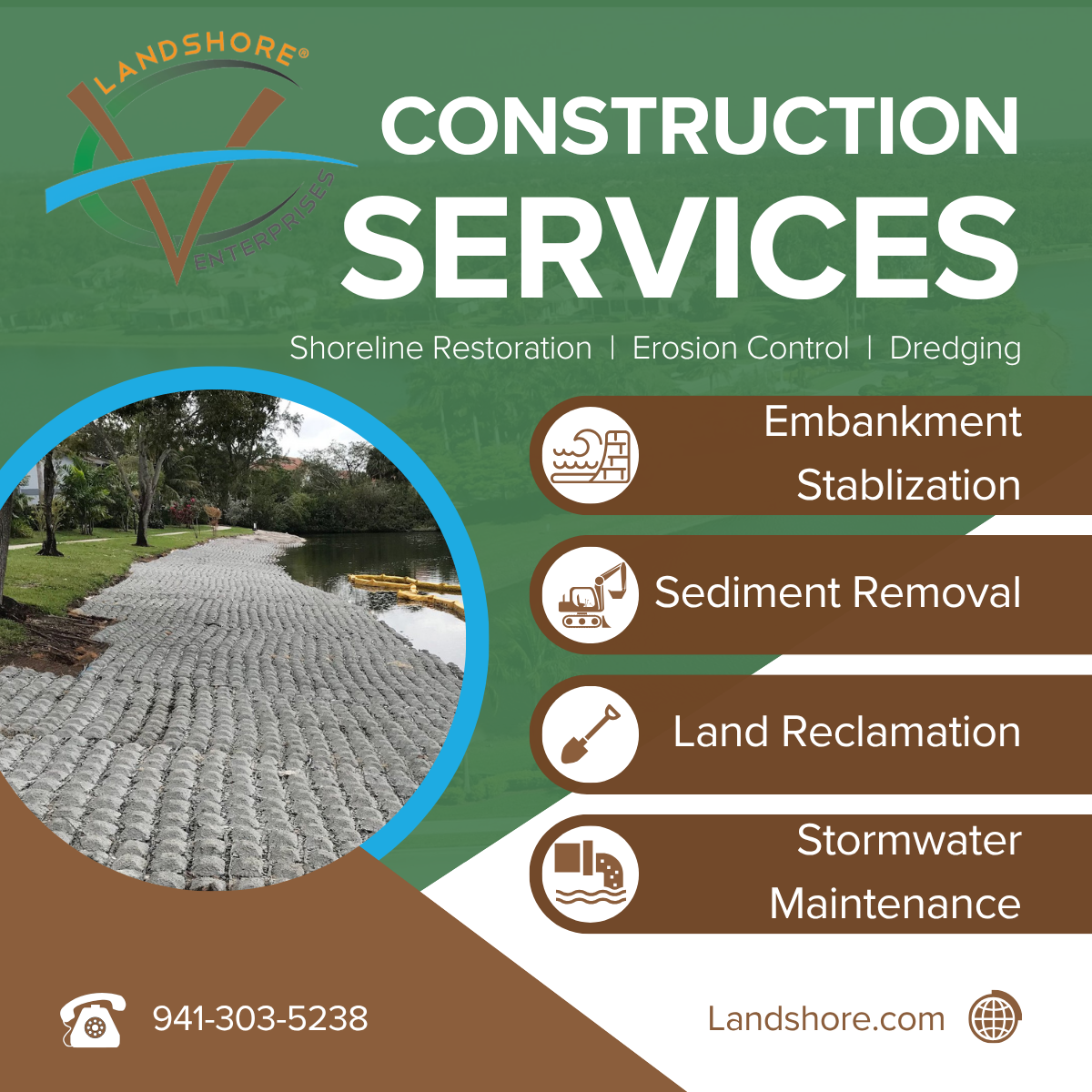
Concrete Block Mat Systems
These systems provide durable erosion protection while allowing flexibility and drainage, making them well suited for many stormwater applications.
Turf Reinforcement Mats
Permanent reinforcement mats help establish vegetation while protecting the underlying soil from erosion.
Geocellular Confinement Systems
These systems stabilize slopes by confining soil within interconnected cells, increasing resistance to erosion.
Living Shorelines
Where appropriate, living shoreline techniques combine vegetation with structural elements to create resilient, environmentally beneficial shorelines.
The most appropriate solution depends on factors such as slope geometry, soil conditions, hydraulic forces, environmental permitting, maintenance expectations, and project goals.
Why an Evaluation Matters
No two ponds are exactly alike.
Before selecting a repair method, it’s often beneficial to evaluate:
- Existing shoreline conditions
- Water level fluctuations
- Drainage patterns
- Soil stability
- Sediment accumulation
- Existing infrastructure
- Long-term maintenance objectives
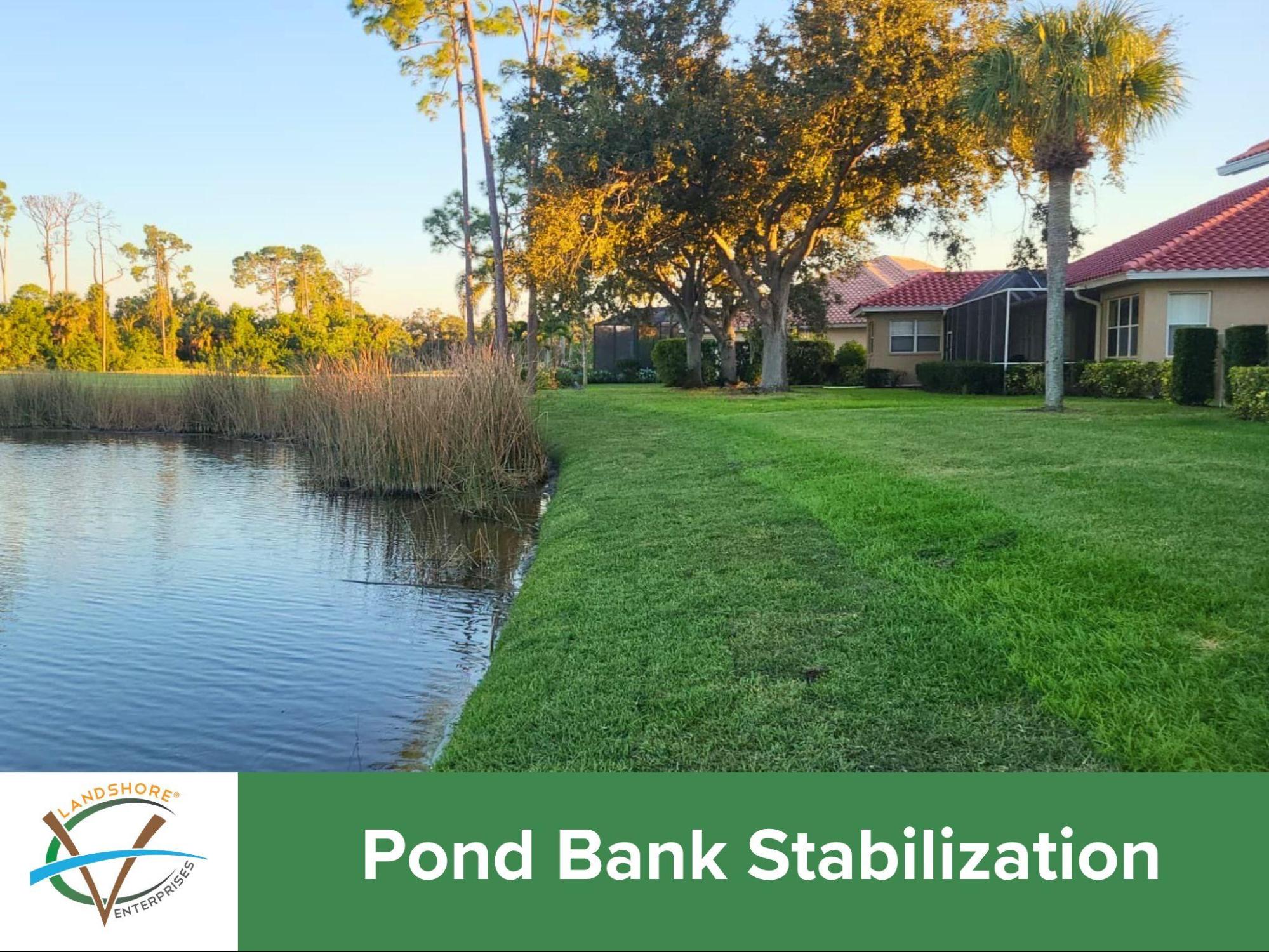
A comprehensive assessment helps ensure the selected solution addresses both the symptoms and the underlying causes of erosion.
Protect Your Investment
Stormwater ponds, lakes, and drainage systems represent significant infrastructure investments for communities and property owners.
Routine inspections and timely repairs can extend the service life of these assets while reducing the likelihood of emergency failures and costly reconstruction projects.
If you’ve noticed shoreline erosion on your property, addressing it early can provide more repair options and help preserve the long-term performance of your stormwater system.
Partner with Landshore Enterprises
We help communities, golf courses, commercial properties, and public agencies throughout Florida evaluate and restore failing shorelines.
Our team provides inspections, engineering support, shoreline stabilization, drainage improvements, dredging, and construction services designed to address the unique challenges of each site.
Whether you’re dealing with minor erosion or a significant shoreline failure, we’re here to help identify practical, long-lasting solutions that protect your property and your investment.